If you’re considering a wrinkle relaxer treatment, you’ve probably heard of Botox, Dysport, and Jeuveau. But what’s the actual difference between them?
All three are injectable neuromodulators that work by temporarily reducing muscle activity to soften the appearance of dynamic wrinkles. While they share the same basic mechanism, they are different prescription products with different formulations, FDA-approved indications, and dosing systems.
So, is one better than the others?
Not necessarily. The right wrinkle relaxer depends on your facial anatomy, muscle movement, treatment goals, previous treatment history, and your injector’s assessment.
At NAM Aesthetics in Maitland, FL, we offer Botox, Dysport, and Jeuveau and take a personalized approach to determining which option makes the most sense for each patient.
Botox, Dysport, and Jeuveau all contain botulinum toxin type A. They work by temporarily interrupting the signals between nerves and targeted muscles, reducing muscle contraction.
This can soften the appearance of expression lines and wrinkles while still allowing for natural facial movement when treatment is appropriately dosed.
The biggest differences are in their specific formulations, approved uses, dosing units, and how each product behaves when injected.
It’s important to know that the units used for Botox, Dysport, and Jeuveau are not interchangeable. A certain number of units of one product does not equal the same number of units of another.
Botox Cosmetic is one of the most established and widely recognized neuromodulators. It is FDA-approved for temporarily improving the appearance of moderate to severe glabellar lines, crow’s feet, and forehead lines in adults.
Because Botox has been used for decades, there is extensive clinical experience with the product across a wide variety of facial treatment areas.
Patients often choose Botox when they want a subtle reduction in movement while maintaining a natural appearance.
Dysport is another botulinum toxin type A product. It is FDA-approved for the temporary improvement of moderate to severe glabellar lines in adults.
One characteristic frequently discussed with Dysport is its tendency to spread somewhat more broadly from the injection point compared with some other neuromodulators. Whether that is beneficial depends entirely on the treatment area and the patient's individual anatomy.
For some patients, Dysport can be an excellent option for achieving a smooth, natural-looking result.
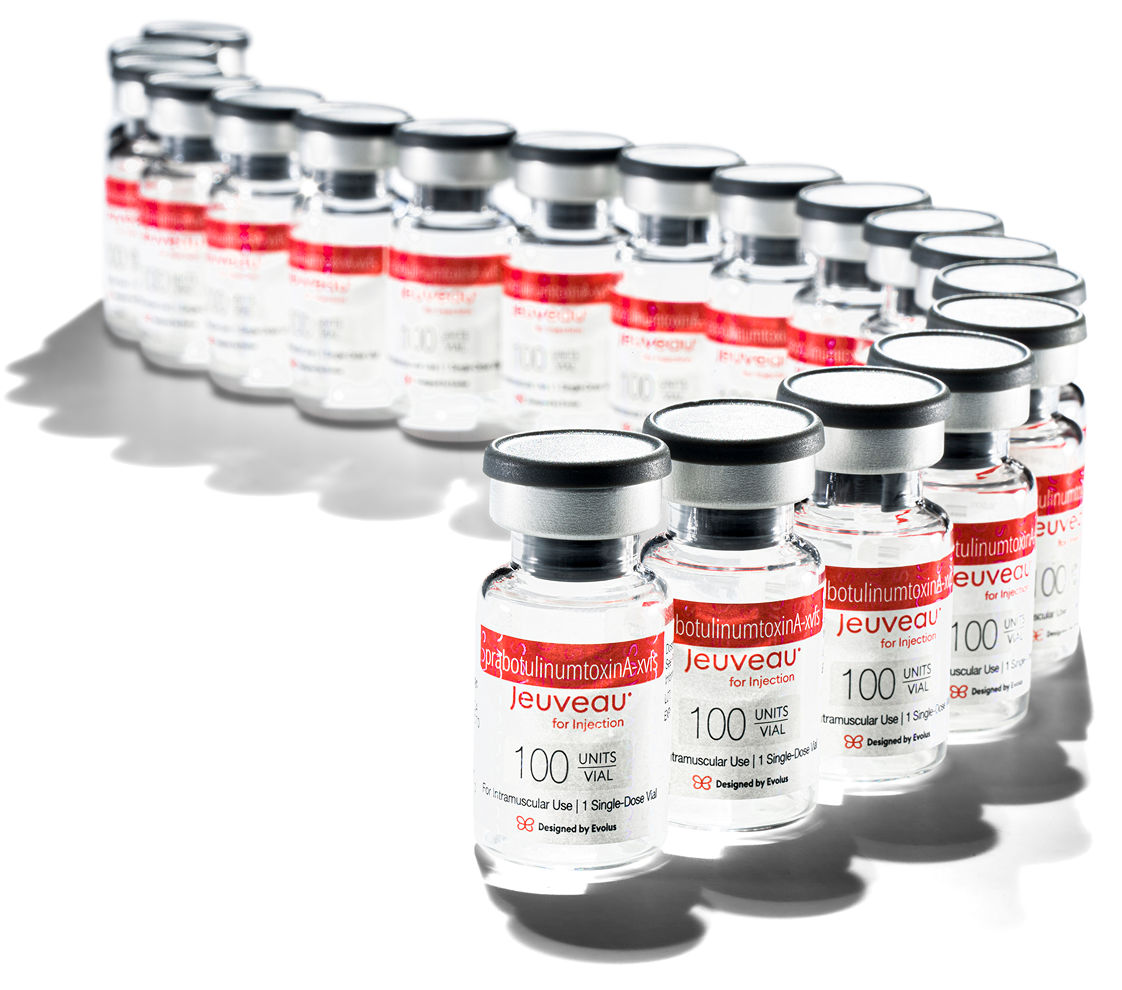
Jeuveau is a newer-generation botulinum toxin type A product specifically developed for aesthetic use. It is FDA-approved for the temporary improvement of moderate to severe glabellar lines in adults.
Jeuveau has become a popular option for patients looking for a modern alternative to traditional Botox treatments.
Like Botox and Dysport, Jeuveau temporarily reduces targeted muscle activity. The goal isn't to eliminate facial expression—it is to strategically reduce movement that contributes to unwanted lines.
There isn't one wrinkle relaxer that is universally right for every patient.
Your injector may consider several factors before choosing a product, including:
This is one reason choosing an experienced injector is often more important than simply choosing a particular brand.
At NAM Aesthetics, we don't approach wrinkle relaxers as a one-size-fits-all treatment. Tara Barone, MSN, FNP-C evaluates your facial movement and anatomy to determine an appropriate treatment plan designed around your goals.
They are similar, but they are not identical.
All three are botulinum toxin type A products that temporarily reduce muscle activity. However, they are manufactured differently and have different formulations.
Their FDA-approved indications also differ.
Most importantly, their units cannot be directly compared.
For example, if someone tells you they received 20 units of Botox, that does not mean they received the equivalent of 20 units of Dysport or 20 units of Jeuveau.
Each product has its own dosing system, which is why comparing treatments based solely on the number of units can be misleading.
The basic mechanism is similar.
When injected into a targeted muscle, these neuromodulators temporarily interfere with nerve signals that cause the muscle to contract. Reduced muscle activity can soften existing dynamic wrinkles and may help prevent those lines from becoming more pronounced over time.
However, individual results can vary.
Two patients receiving the same product and similar treatment areas may experience different onset times, duration, and degree of movement reduction.
Your metabolism, muscle strength, treatment area, dosage, and individual response can all play a role.
Patients often want to




.avif)
.avif)